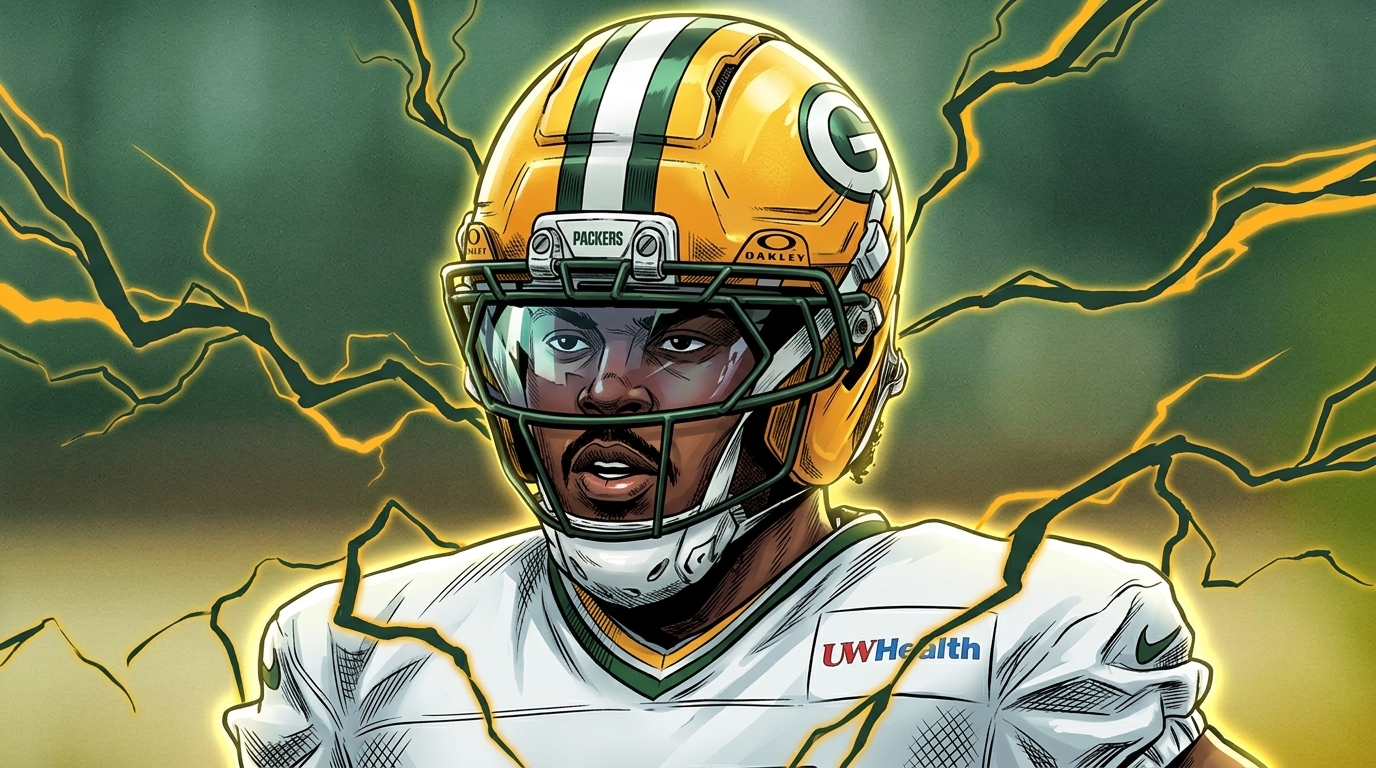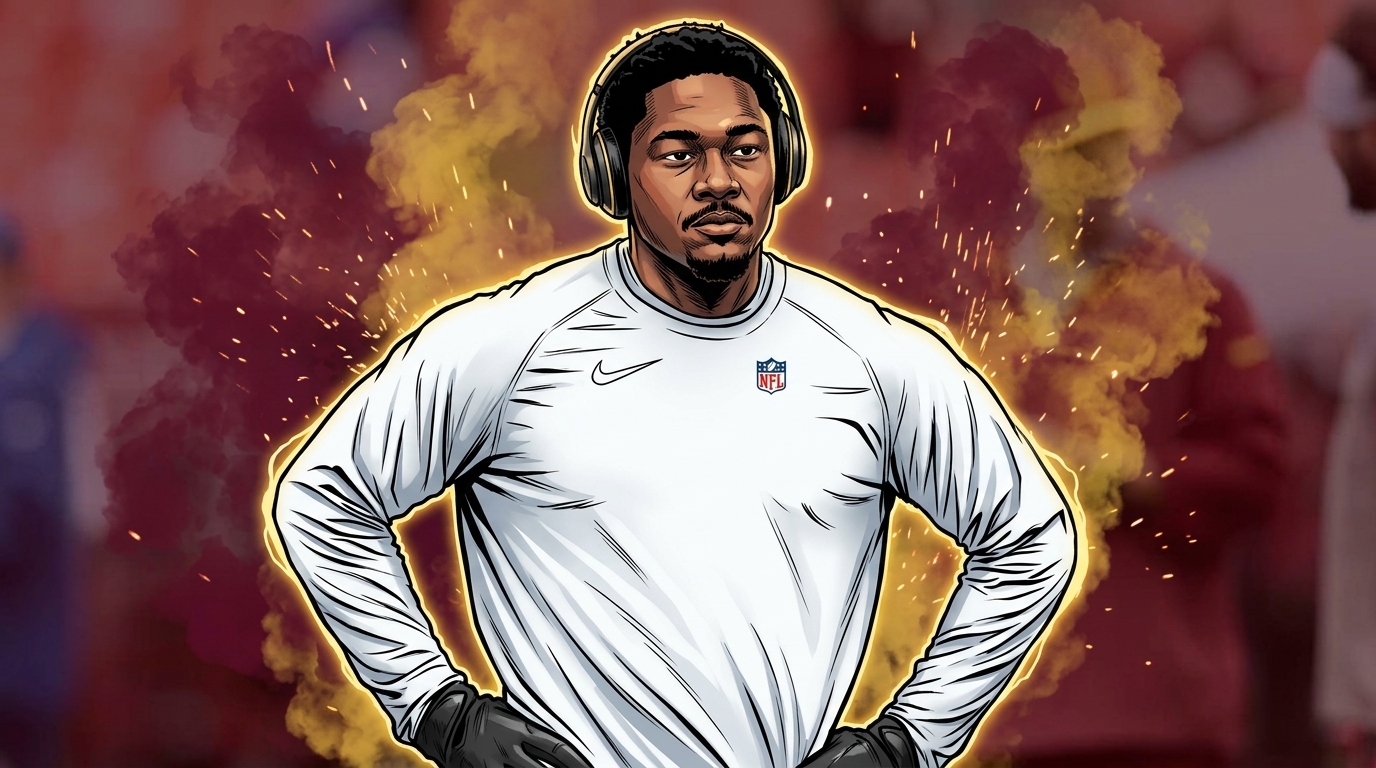

Is Stefon Diggs really a WR2? We’ve all read the same training camp transcripts out of Ashburn this week and somehow come away with two different stories, depending on whose quote we clip. Read Jayden Daniels’ answers and you get a locker room in harmony: a franchise quarterback thrilled with his new receiver, praising the hands, the route detail, the football IQ. Read Diggs’ own words and you get something less settled: a 32-year-old star saying the right things about accepting a WR2 role behind Terry McLaurin, then admitting, almost in the same breath, that his heart hasn’t caught up to his press-conference vocabulary.
Diggs isn’t simply the complementary piece the Washington Commanders needed to survive the coverage McLaurin draws. He’s also still, in the way that matters most to him, the alpha at the top of Washington’s receiver depth chart he’s occupied his entire career. I think both things are true at once, and the tension between them is the actual story here, not a contradiction that needs resolving before we move on.
Start with what Daniels is selling. In an interview with NFL Network’s Mike Garafolo and Brian Baldinger, the quarterback didn’t hedge: “Great hands, he catches everything,” he said, adding that Diggs is “definitive with his routes,” “friendly when he comes out the top of his routes,” and “super smart.” That’s a quarterback describing a receiver he trusts completely, the kind of praise usually reserved for a No. 1, not a complementary piece who’s supposed to work the underneath stuff while somebody else draws the attention.
Diggs, for his part, arrived talking about somebody else’s talent. Shortly after joining camp, he called Daniels a star, even a superstar: “They got a great young quarterback. I’m familiar with young quarterbacks. He’s a star, he’s a superstar.” Dan Quinn, not usually one for restraint on a roster move he likes, called the signing “a big deal.” For a team that just watched its quarterback take a Cinderella run further than anyone expected, that’s about as close to hyperbole as Quinn allows himself. (Quinn’s idea of hyperbole is still, underneath it, just a compliment.)
Then comes the wrinkle. Diggs initially framed himself as simply the best at his new job: “You can’t name a No. 2 better than me.” That’s still an alpha’s answer dressed in team-friendly language: there’s no WR2 better than me, sure, but the whole sentence depends on accepting the No. 2 label in the first place. Days later, he revised it. Asked directly, he admitted the label doesn’t fully fit: “I say two on camera, but in my heart, I’m going to say [best] No. [1].” Same guy, same week, two different answers. (I used to compile notes for TV analysts, and the rule never changed: the shorter, cleaner quote is the one that airs. Diggs gave two versions of himself. Guess which one is on a chyron right now.)
None of that is hypocrisy so much as what accepting a diminished role actually looks like when you’ve spent a career being the guy. Diggs is 32, on a one-year deal worth up to $12 million after New England released him in March rather than let his 2026 cap hit balloon from $10.5 million to roughly $26.5 million, a business decision about accounting, not a verdict on what he has left. His 2025 season backed that reading up: 85 catches, 1,013 yards, four touchdowns, his seventh career 1,000-yard year, on a Patriots team that rode all the way to Super Bowl LX before losing to Seattle, 29-13. A receiver with that resume doesn’t wake up one morning and genuinely believe he’s a No. 2. He can say it. He can even mean it, the way you mean a job description. But the instinct that got him here doesn’t switch off because a depth chart says McLaurin first.
There’s a hometown layer to this, too. Diggs is a Gaithersburg, Maryland native and Maryland alum who’s said he wants to “put on for my city,” which raises the stakes on how he wants to be remembered here, well beyond targets and touchdowns. That’s not a small thing for a guy weighing what he’s willing to accept, quietly, in year twelve.
Here’s how the harmony version of the story has played out publicly since camp opened:
https://twitter.com/NFL_DovKleiman/status/2086960079941648494
That’s the version that gets amplified: the unity, not the hedge. It’s the more comfortable narrative for everyone involved, which is exactly why it’s the one that travels fastest. (Every camp produces at least one everybody’s-getting-along storyline. The interesting ones are the ones where a player’s own quotes don’t fully cooperate with it.)
I think Diggs means every word of the team-first talk, and I also think the WR1 instinct surfaces the moment target competition gets real. Not because he’s difficult (by every account out of this camp, he isn’t) but because you don’t unlearn twelve years of being the first read just because a depth chart says otherwise. My guess is the accommodation holds through camp and into the early part of the season, right up until Washington needs a contested catch in a two-minute drill and both Diggs and McLaurin are running to the same seven yards of grass. That’s not a hypothetical Washington should dread. It’s the entire point of signing him. But it is a real tension, and treating training-camp harmony as proof it’s already settled is the kind of thing you only believe if you clipped Daniels’ quotes and skipped Diggs’.
Worth watching, once games start counting, is whether that tension actually shows up in target competition the way the camp quotes suggest it might, or whether professionalism on both sides just makes it a non-issue. We’ll find out along with the rest of our NFL training camp coverage the way we find out most things in August: slowly, and then all at once, once the snaps stop being practice reps.