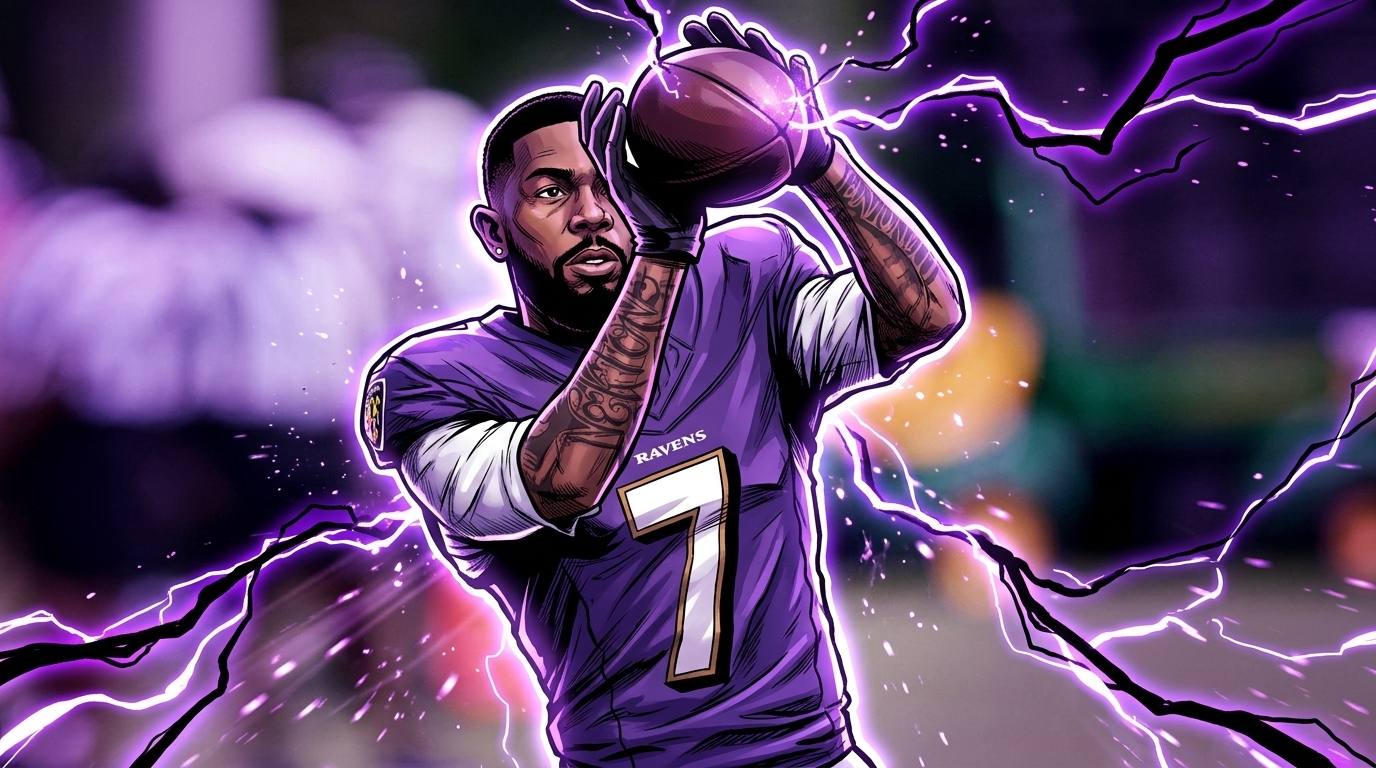

Rashod Bateman was arrested on June 3 in Walton County, Georgia, and charged with battery-family violence, reckless conduct, and first-degree criminal damage to property. That’s the documented starting point of a case the Ravens wide receiver is still working through, and it’s worth being precise about it, because precision is the part of this story that’s gotten the least attention. We keep seeing the case described as one continuous timeline, but it’s actually two separate processes moving at two different speeds: a Georgia criminal court and the NFL’s personal conduct policy review. Mixing them up is how you end up believing this case is further along, in either direction, than it actually is.
What the Arrest Warrant Actually Says
The details come from the arrest warrant, which TMZ obtained and cited directly. Around 6 a.m. on June 3, Bateman allegedly used an object to break the windshield and driver’s-side window of a 2021 Mercedes belonging to the mother of his child. A three-month-old infant was in a car seat in the back of the vehicle at the time. Police observed that the woman had facial lacerations and contusions consistent with broken glass. Bateman surrendered to the Walton County Sheriff’s office that same day.
His attorney has pushed back on how the case has been covered rather than on the facts investigators laid out. Told to TMZ: “It is unfortunate that a personal family situation has been taken completely out of context for sensational reasons.” That statement addresses framing. It does not dispute the warrant, the charges, or the timeline above.
Bateman is entering his sixth season in Baltimore off a career-low 2025, 19 catches, 224 yards and two touchdowns, a year after signing a three-year, $36.75 million extension that included $16.5 million guaranteed at signing. None of that changes the legal or procedural facts. It’s the professional backdrop both processes are unfolding against.
Is Rashod Bateman Suspended by the NFL?
Not yet. The NFL is reviewing Rashod Bateman’s case under its personal conduct policy, but no discipline has been announced. A first-time family violence violation can carry an unpaid suspension of up to six games, and the league’s process runs separately from Bateman’s ongoing Georgia court case.
ESPN reported that the league is reviewing the case under the personal conduct policy and hasn’t commented further while the legal process continues. The policy doesn’t require a criminal conviction, or even resolved charges, before the NFL can act on its own findings. That’s the detail most likely to get lost in a story treated as a single narrative rather than two.
The Ravens have said little beyond confirming awareness and cooperation. The team’s statement: “We are aware of the situation involving Rashod and have been in direct communication with him. We notified the league office and have been cooperating throughout the process.” ESPN Ravens reporter Jamison Hensley posted it in full:
https://twitter.com/jamisonhensley/status/2090929968154915078
That’s the extent of the public record on team and league response right now: acknowledgment, cooperation, and a review with no announced conclusion.
Why the Court Case and the League Review Aren’t the Same Clock
The clearest illustration of why these tracks shouldn’t be merged is what happened with the no-contact order. Weeks after the arrest, Bateman petitioned to have it lifted, telling the court the alleged victim wanted contact restored. The court granted a modification, not a removal. The order now bars violent contact specifically, and it conditions any renewed contact on Bateman completing a court-ordered class first. That’s a meaningfully different outcome than “the no-contact order was lifted,” which is the shorthand this case has picked up in some places, and it matters because it tells you the court still saw a reason to keep a restriction in place.
None of that touches the NFL’s side of things. The personal conduct policy review runs on the league’s own clock, independent of whatever Walton County decides and independent of whether the class gets completed on schedule. ESPN’s reporting on the policy’s structure makes clear the league doesn’t need the criminal case resolved to act. It can move on its own findings, at its own pace, and reach its own conclusion regardless of how or when the Georgia case ends.
I think the most likely sequence, based on how the personal conduct policy is built, is that the NFL’s review outlasts whatever happens next in Walton County, whether that’s a plea, a dismissal, or a trial date. The league’s process isn’t tied to a verdict, and a first-time family violence finding under the policy can carry an unpaid suspension of up to six games without a single criminal charge needing to stick. If discipline comes, expect it to land as its own announcement, not a reaction to whatever the court decides. The court case might resolve first. It might resolve last. Either way, it won’t be the trigger for the league’s decision.
What to actually watch for: whether Bateman completes the court-ordered class, since that’s the condition tied to restored contact, and whether the NFL’s review produces any statement before Baltimore’s season is underway. Those are two separate developments on two separate calendars, and treating them as one again will only muddy a case that finally has a documented shape. We’ll keep tracking both sides of it in our NFL coverage as they move.