
Imagine you’ve been chasing this since you were eight years old. You made a provisional roster of 55 players — which is already an extraordinary thing, because most people who love this sport never get that far. You’ve been a part of the USMNT program during the buildup to the biggest tournament on American soil in 32 years. You’ve waited. You’ve trained. You’ve done everything asked of you.
And then your phone buzzes. It’s an email.
That’s how Mauricio Pochettino told 29 players their World Cup was over. Not a call. Not even a voicemail. An email. Per Sports Illustrated’s reporting on how players learned they were cut, all 55 members of the provisional roster were notified of their status electronically — but the 26 who made it also got a WhatsApp video from Pochettino himself. A personal video message, right to their phones. The 29 who were cut got the email and nothing else. Let that tiered system sit with you for a second. The coach found time to record a video for the guys who are going to the World Cup. He did not find time to dial the guys whose World Cup dreams he was ending.
This is not a technicality. This is a character test. And Pochettino failed it.
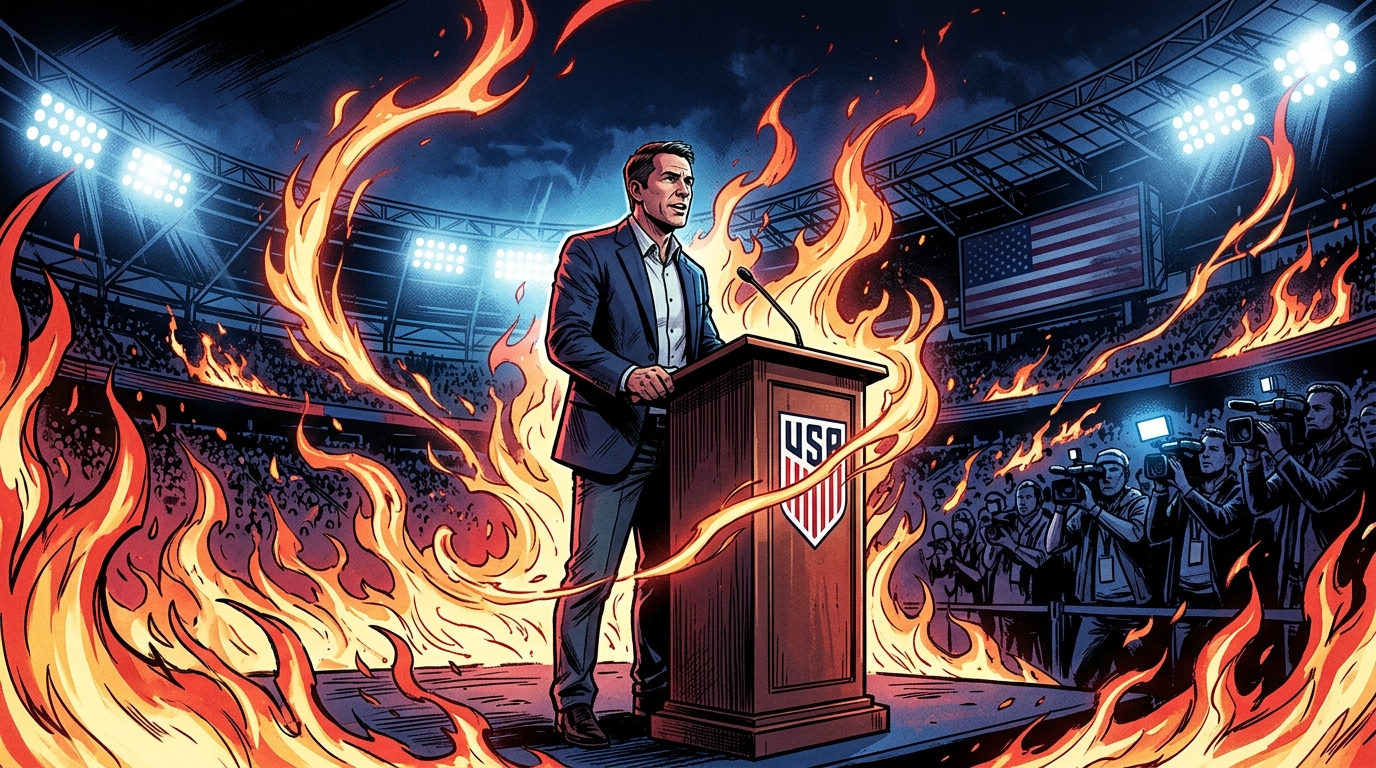
At the USMNT roster reveal at Pier 17 in Manhattan on May 26 — the official USMNT World Cup 2026 roster announcement — Pochettino was asked directly about his decision to notify cut players by email, and he defended it without flinching. His defense: “The players who didn’t make the roster, they don’t want to hear me apologize.” He also said he was cut from Argentina’s World Cup squads in 1994 and 1998 without a personal call, and that he didn’t want one. He’s projecting his own psychology onto 29 different human beings who didn’t sign up to have that done to them.
Here’s the thing about that defense: it’s actually worse than saying nothing. He pre-announced this policy in March. He knew he was going to do this. He thought about it, stood by it, and then got on stage and essentially said the players he cut should be grateful he didn’t make it more painful. “I understand the player, they didn’t make the roster, they didn’t want to hear me,” he told reporters. He described losing sleep over the decisions. That’s nice. Diego Luna and Tanner Tessmann — two of the more prominent names who didn’t make it — might have appreciated a two-minute phone call more than Pochettino’s sleepless nights.
Herculez Gomez, who played in the 2010 World Cup, called it exactly what it is. His word: “diabolical.” He elaborated: “These are players ending a dream who have worked their whole life for the opportunity. They deserve more than just an email.” Gomez also made the contrast that should end this conversation — Bob Bradley made individual calls. Jurgen Klinsmann made individual calls. Those aren’t ancient figures from some pre-digital era when phone calls were the only option. That’s the standard this program held within living memory. Pochettino looked at that standard and decided he knew better.
https://twitter.com/herculezg/status/2058952077041111327
Landon Donovan offered partial sympathy for the approach, suggesting not hearing from Pochettino directly “might actually be a good thing.” Which, okay, fair — that’s a real sentiment when the alternative is a perfunctory call from a coach who’s already moved on. But the answer to “the call might be hollow” is not “send an email.” The answer is make the call meaningful. You have their numbers. You know their names. You’ve watched them train for months. Two minutes. That’s all it takes to be a human being.
This is the kind of institutional dysfunction that follows a program for years — the moment where an organization signals what it actually values. What Pochettino signaled is that the 29 players who didn’t make it were administrative outputs, not people. Roster decisions happen in soccer every day. This one lands differently because of what’s at stake. The US hasn’t hosted a World Cup since 1994. These players grew up in that 32-year absence. They built careers around the hope of playing in one on home soil. When that hope ends, you pick up the phone. Full stop.
You can read about USMNT’s chaotic tournament prep and debate tactics and formation choices and whether the final 26 is the right 26. That’s all legitimate. But none of it touches what this email story actually reveals. Pochettino has been in this sport his entire life. He knows what a World Cup means to a player. He made a deliberate choice to handle the hardest news of these men’s careers via a format you use to confirm a dental appointment.
That’s who he is. He told us in March. He confirmed it at Pier 17. The 29 players know it now too — they just didn’t hear it from him directly.