
Every summer, training camp functions as a preview index — a controlled environment where the questions that will actually determine playoff seeding get their first real answers. Not the preseason, where backups pad stats against other backups. Camp. The 11-on-11 periods, the depth chart decisions, the physical clearances. That’s where the signal is.
I run a fantasy baseball projection model every spring, and the hardest part isn’t the math — it’s identifying which early-June data points actually predict August outcomes versus which ones are just noise. Training camp is the NFL equivalent of that problem. Most of what you see won’t matter. A handful of things will matter enormously.
Here are the five battles worth filtering for.
Why Is the Chiefs’ Quarterback Room the Biggest Story in Camp?
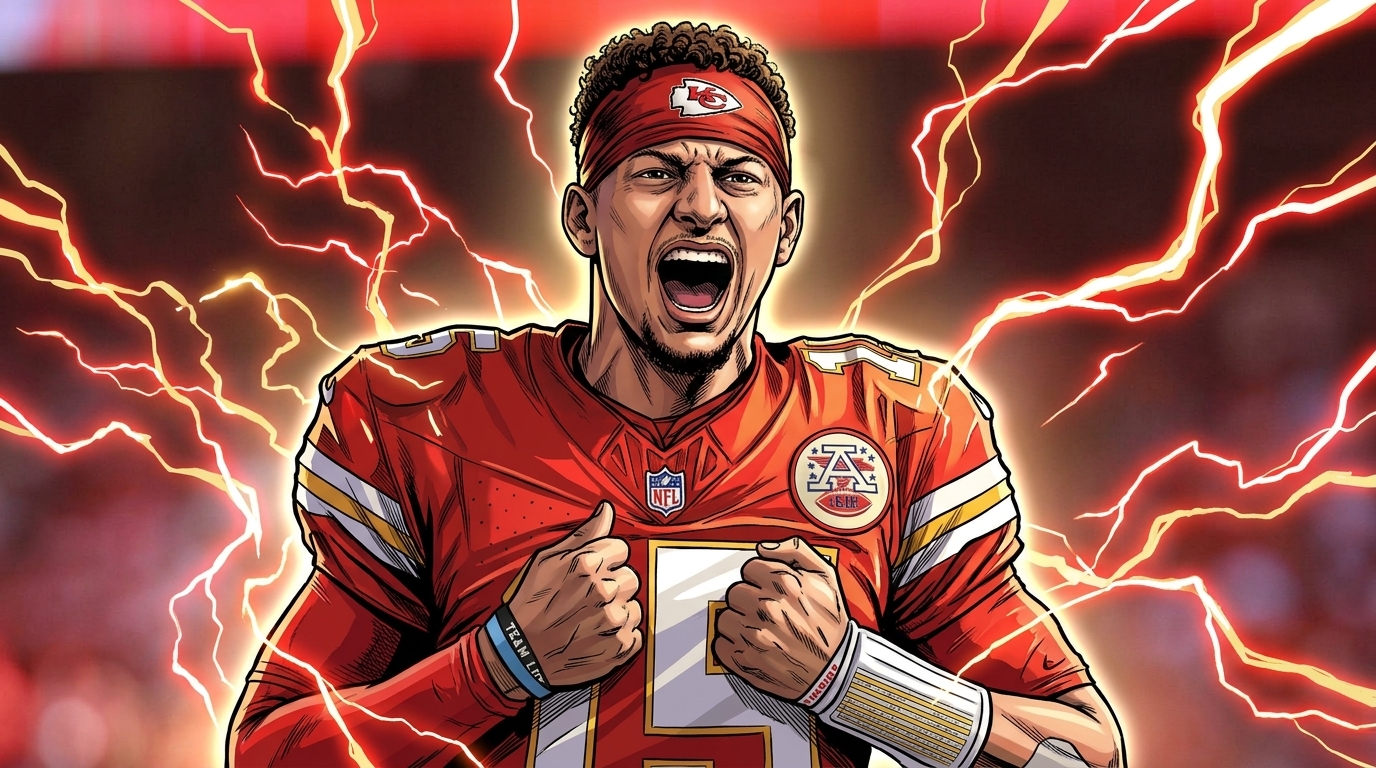
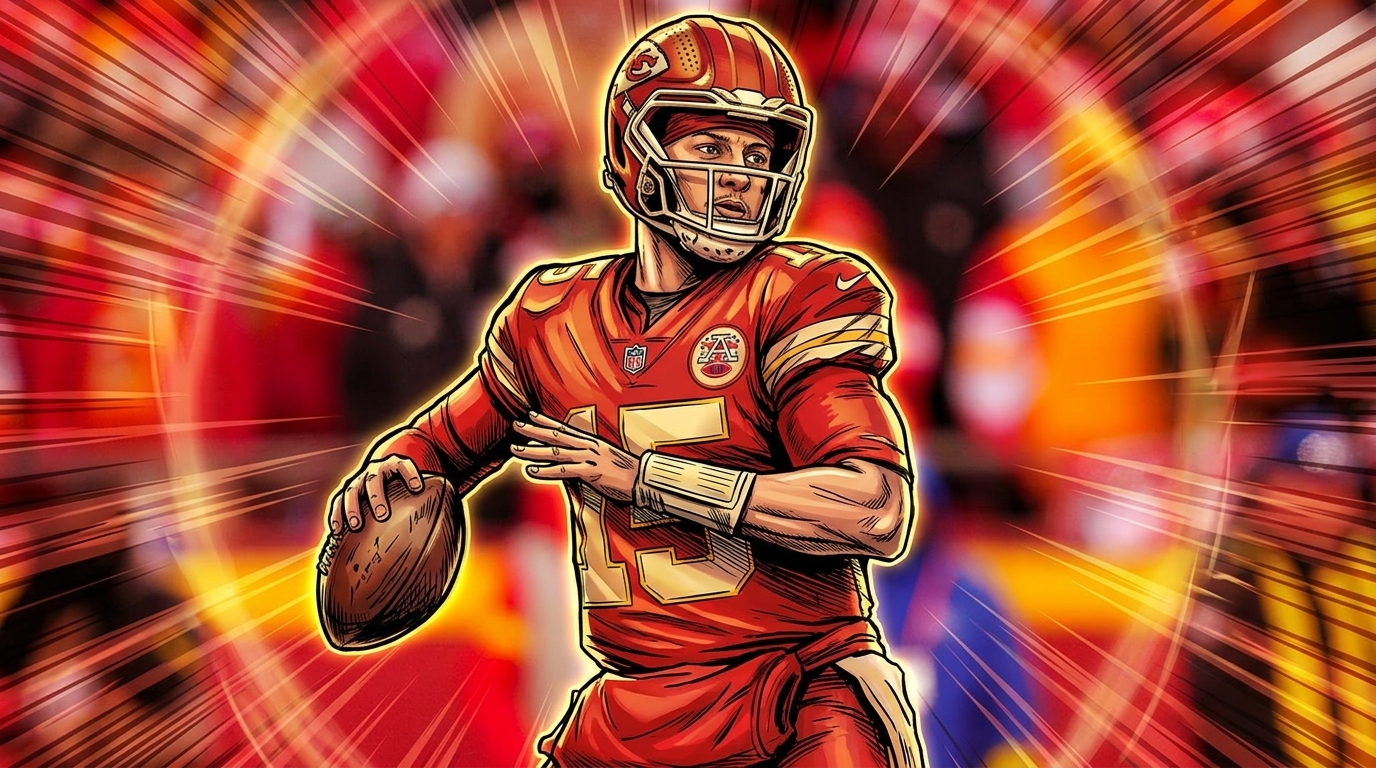
Patrick Mahomes tore his ACL and LCL in his left knee in December. He’s been training seven hours a day at the Kansas City Chiefs facility since surgery. Every indicator says he’ll be ready. The harder question is what “ready” looks like against a Denver Broncos team that won the AFC West in his absence.
The Chiefs’ quarterback room this camp carries more meaningful uncertainty than any other position group in football. Mahomes has stated his goal publicly and repeatedly.
https://x.com/RapSheet/status/2077543250999627836
Ian Rapoport reports Mahomes “appears on track for his goal of being ready for Week 1,” and Andy Reid said he “looks like he’s going to be able to do some things during camp.” That phrasing matters — “some things” is measured language from a coach who doesn’t deal in false optimism.
Meanwhile, Justin Fields — acquired from the New York Jets for a 2027 sixth-round pick — is the backup entering his fourth NFL team. Fields has the starting experience to make this a genuine competition narrative if Mahomes shows any hesitation on the repaired knee. Camp will tell us whether that’s a real story or just a footnote.
Chiefs veterans report July 28 in St. Joseph, Missouri. The reps Mahomes takes — and doesn’t take — in those first two weeks will be the most-watched practice footage of the summer.
Can Malik Nabers Actually Be Ready for Week 1?
Probably not at full capacity — but the Giants are building their 2026 offense around the hope that he’s close. Nabers is expected to open camp on the PUP list after tearing his ACL and meniscus in Week 4 of 2025. The realistic target is a Week 3 debut on a limited workload. Best case, he passes a physical later in the summer and plays Week 1 on a pitch count.
The number that makes this matter beyond one player’s health: Nabers accounted for 54.9% of the Giants’ air yards before his injury. That is a staggering single-player dependency. No receiver in the league — not even the elite ones — should be carrying that much of a passing offense’s aerial volume. It means the Giants’ entire offensive identity collapses when he’s not on the field.
New head coach John Harbaugh, who spent 17 seasons with the Baltimore Ravens before signing a five-year deal in January, has described himself as “encouraged” by Nabers’ rehab progress. The Giants signed veteran depth receivers as insurance. But insurance is exactly what they are — a contingency plan, not a replacement. The Giants need Nabers functional, and camp will tell us whether functional is on schedule.
Who Backs Up Dak Prescott If History Repeats?
Sam Howell is the answer — and the uncomfortable reality is that Howell may be the only backup in the league with genuine starting experience who’s actually been reliable enough to trust in that role. For the Dallas Cowboys, that might be just enough.
The data pattern around Prescott is one of the more consistent trends in the NFC: he has missed five or more games every other season since 2020. By that rhythm, 2026 is a potential miss year. That’s not a prediction — it’s a baseline probability that every honest Cowboys analyst has to account for. Add an unresolved left tackle situation on his blindside entering camp, and the Cowboys have compounding uncertainty at the most sensitive position in their offense.
Prescott came into camp with a sore knee concern. How that resolves in the first week of practice will determine whether Dallas is managing a real health situation or running on hope that an every-other-year pattern finally breaks in their favor.
What Does the Saints’ Crowded WR Room Mean for Olave?
Chris Olave enters Saints camp having cleared the most significant medical hurdle of his career — a blood clot discovered in January 2026 that kept him off contact drills all spring. He was recently cleared ahead of camp, per Albert Breer at SI, and is now facing a different kind of challenge: proving he’s the unambiguous WR1 in a room that added Jordyn Tyson via trade and Barion Brown in the draft while losing Rashid Shaheed and Brandin Cooks in the offseason.
The contract situation adds weight to every rep. Olave is playing on his fifth-year option at $15.493 million in 2026 — the final year of his rookie deal. Saints GM Mickey Loomis has described extension talks as “positive,” which is exactly what GMs say before both outcomes. What Olave actually does in camp and in the early weeks will determine whether those talks stay positive.
The Saints open camp July 29. First full-team padded practice will start answering the question of whether Olave can re-establish himself as a top-of-the-route WR1 after 10 months away.
How Does San Francisco Manage Three Returning Edge Rushers?
This is less a competition and more a logistics problem — one of the most interesting roster management challenges the San Francisco 49ers have faced in years. Nick Bosa tore his ACL in Week 2 against Arizona (September 21, 2025). Kyle Shanahan described it as “as clean as it gets” — no meniscus, no additional ligament damage — and Bosa is on track for full camp participation with 11-plus months of recovery behind him.
The wrinkle: defensive ends Mykel Williams and Keion White are also returning from ACL tears. Three edge rushers, all coming back from the same surgery, all needing ramp-up time, all competing for rush-lane assignments on a defense that was built around Bosa as its anchor. The question isn’t whether all three will play — it’s how San Francisco staggers workloads to get all three healthy through October.
The 49ers’ pass rush was the most disruptive in the NFC when healthy. The data on multi-ACL cohorts in the same position group suggests the early-camp period is the highest-risk window for setbacks. Expect San Francisco’s medical and coaching staff to be unusually conservative in the first two weeks of practice. That caution isn’t a red flag — it’s the right call.
Camp opens for the Carolina Panthers and Arizona Cardinals on July 22. All 32 teams are in by July 28. The five questions above don’t have answers yet. By the end of August, four of them probably will. The one that won’t — Mahomes’ knee, fully evaluated only under competitive pressure — is also the one with the highest stakes for everything that follows.
The data will be imperfect and the sample sizes will be small. Watch the practice reps, not the press conference quotes. That’s where the 2026 season actually begins.