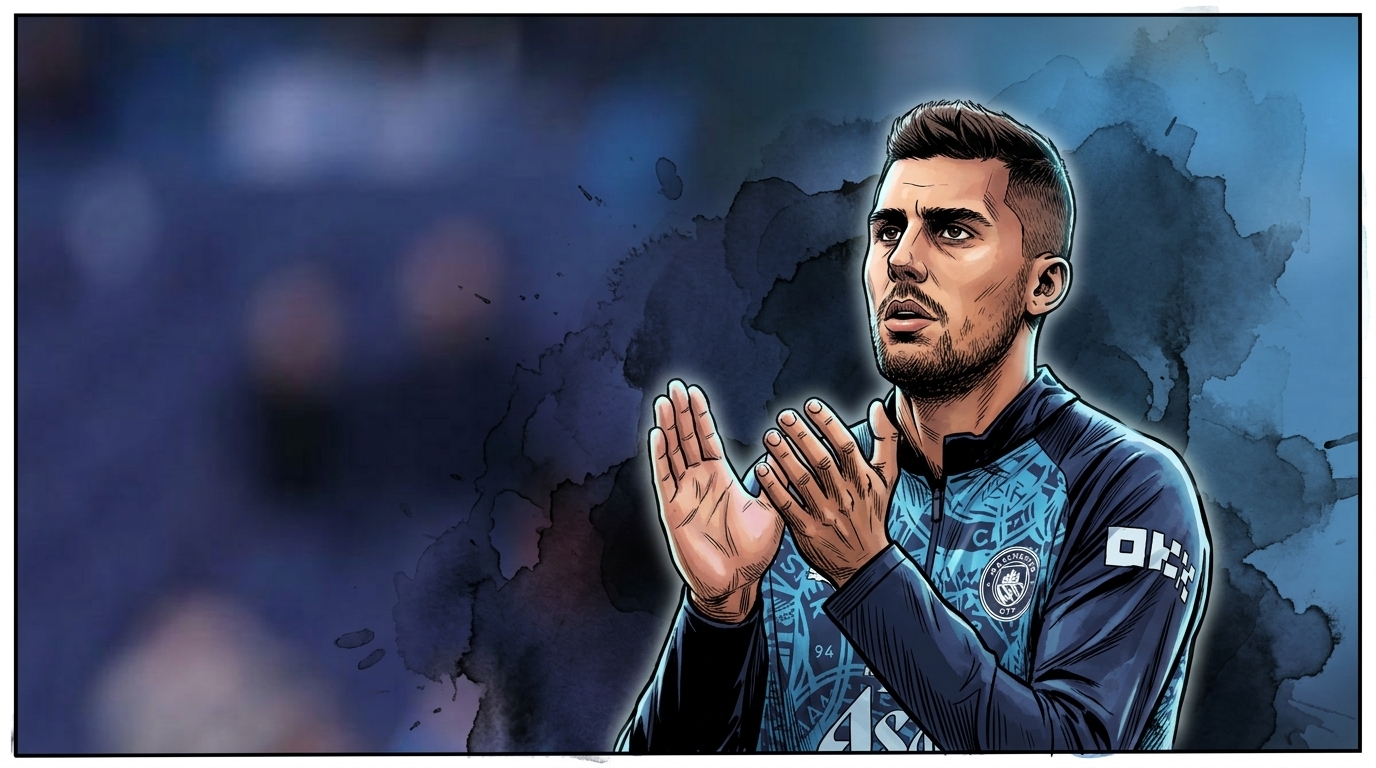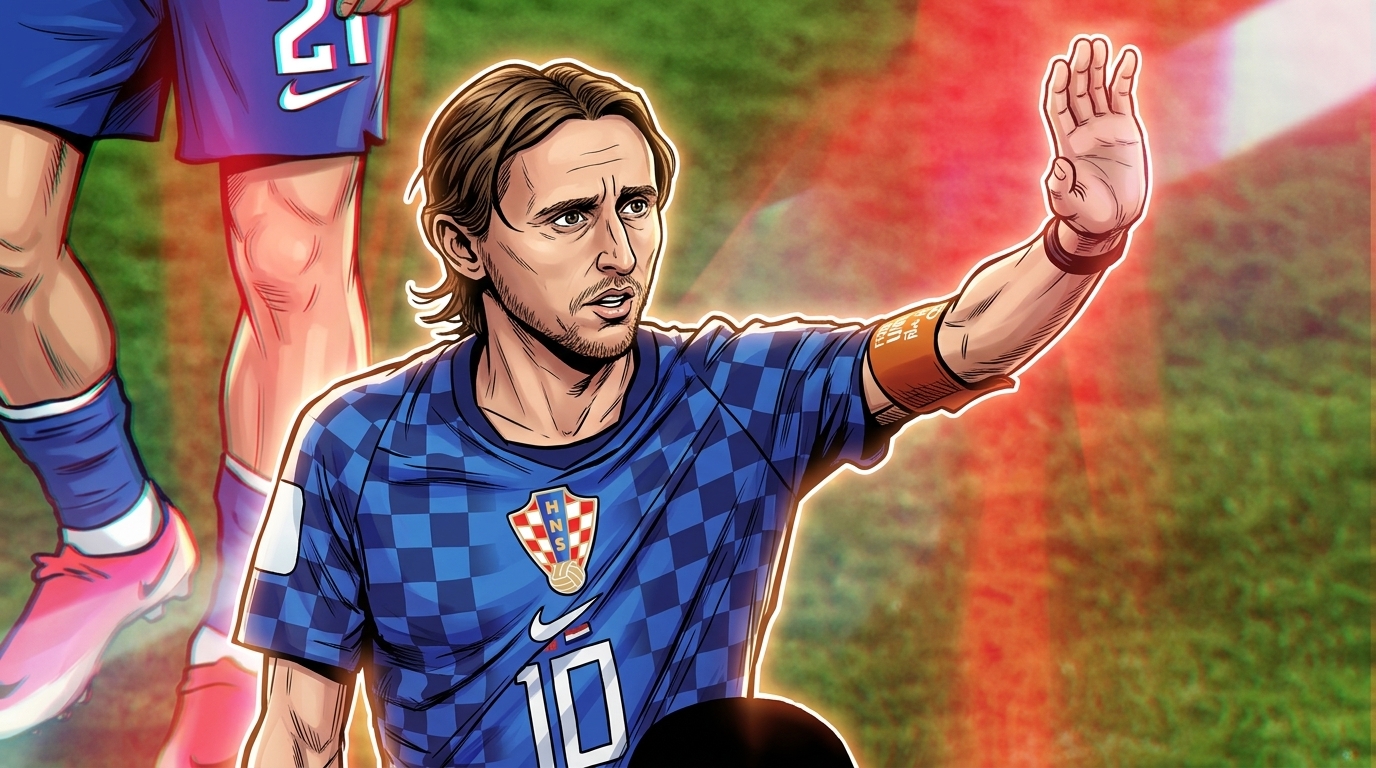

Josko Gvardiol’s header crossed the line in the 103rd minute and Croatia had equalized — until a chip embedded in the match ball said otherwise. FIFA’s connected-ball technology detected that Igor Matanovic had grazed the cross, rendering Mario Pasalic offside in the build-up. The goal came off the board. The review box confirmed it. Portugal advanced 2-1. And Luka Modric’s fifth World Cup ended the way nothing about his career deserved — cleanly, bureaucratically, and without anyone to blame.
That last part is the problem. As covered in yesterday’s piece on Ronaldo and Portugal’s perspective, this was a match that technically produced a correct result. VAR got it right. The ball chip got it right. The system worked exactly as designed, and in doing so stripped the exit of every last molecule of oxygen.
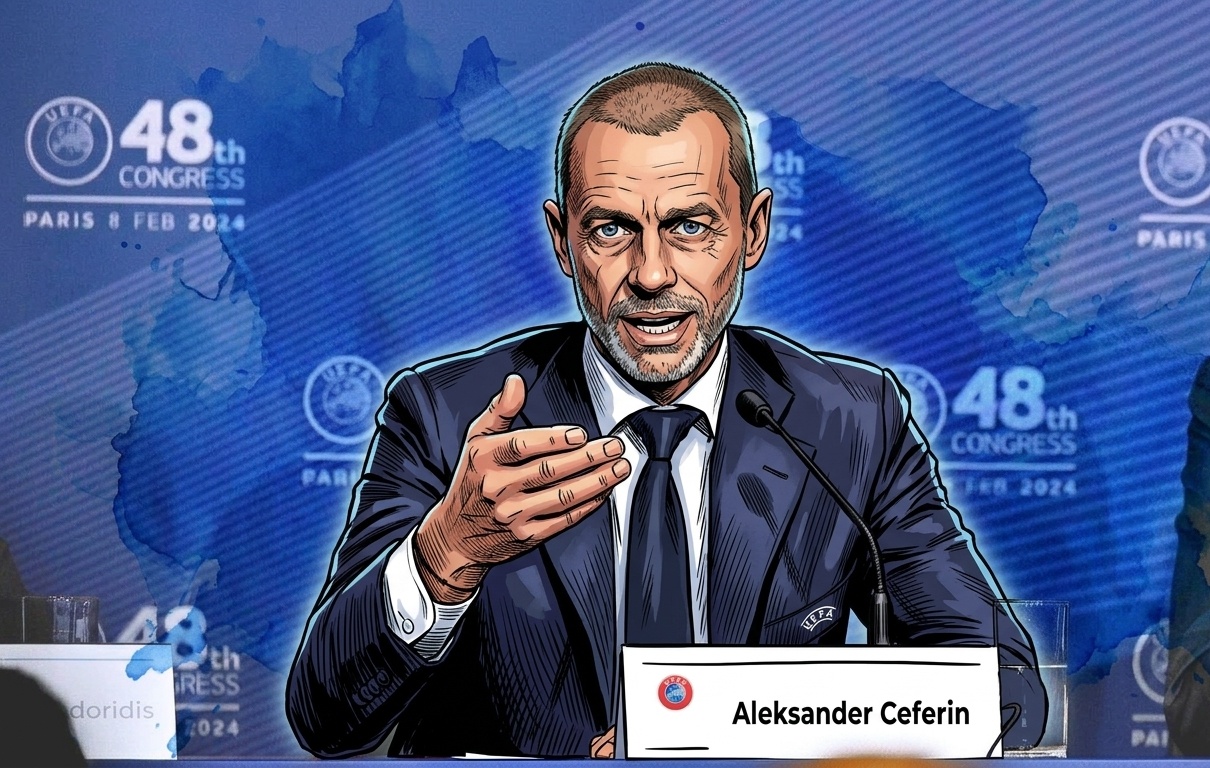
Zlatko Dalic said it plainly after the whistle: “It kills the emotions. It kills everything within you. It kills what you are experiencing and then brings you back to the beginning. Football should be fair… but we’ve gone on too far about VAR.” He’s not wrong. He’s also not going to get an apology.
Modric himself wasn’t ambiguous. “He says Matanović touched the ball, but we watched the footage, there’s no evidence that he touched the ball.” He’d already staked out his threshold: “That is why I say it should only be used if the error is 200 per cent.” On the Ronaldo penalty (VAR awarded it after ruling Vlasic fouled a Portuguese midfielder in the box), he went further: “If it were the other way around, VAR would never have been included.”
Maybe that’s true. Maybe the system carries biases that don’t show up in the rulebook. But even granting every one of VAR’s premises, the outcome is the same. A 40-year-old playing his 23rd World Cup match, 66 touches and 3 tackles in a game that went to extra time, walked off the pitch in Toronto because an algorithm processed a ghost touch correctly. The farewell was technically clean and emotionally empty.
I’ve written about a lot of exits that felt wrong for the wrong reasons: bad refereeing, a scoreline that lied. This one felt wrong because the technology worked. What the system was built to optimize for is accuracy. What it cannot optimize for is meaning. The machine has no mechanism for accounting for the fact that nobody will remember how Croatia lost — only that the review confirmed and the board stayed red.
https://x.com/FIFAWorldCup/status/2070697513737208225
The strongest counter is obvious: sport is better when calls are correct. Every fan whose team was robbed by a phantom foul would trade catharsis for accuracy without hesitation. That argument is real. But it assumes the purpose of sport is outcome correctness, when most of what we actually remember (Maradona’s hand, the goals that were never given and the goals that never should have counted) lived in the contested middle. VAR getting it right is the tragedy because it means there’s no contested middle anymore. Just a box, a review, a clean exit that felt like nothing, and a career too good for that kind of ending.
Nobody robbed Modric. That’s the worst kind of ending for a career this good.
More from our World Cup coverage.