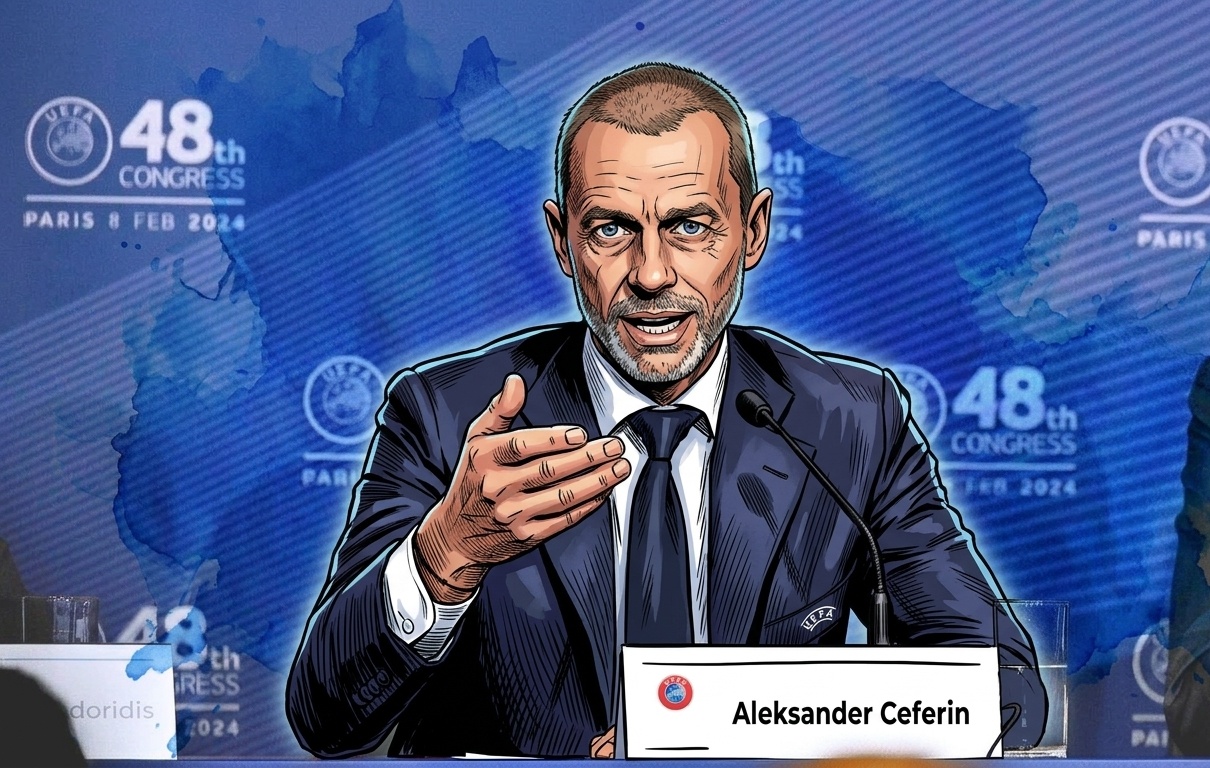

Kylian Mbappé missed a penalty in the first half against Morocco on July 9. Yassine Bounou saved it clean. And France still won 2-0, because Mbappé scored the opener in the 60th minute anyway, then turned around and assisted Ousmane Dembélé’s goal six minutes later. That is what the infrastructure gap looks like when it is fully operational: the best player in the world misses a penalty and the machine doesn’t even notice.
By the end of that quarterfinal, Mbappé had 8 goals in this tournament. Dembélé had 5. According to OptaJoe, France became the first team since Brazil in 2002 to have two players reach 5+ goals in the same World Cup — that was Ronaldo with 8 and Rivaldo with 5. The last time any nation pulled this off, I was three years old and none of these players had been inside a professional training ground yet.
https://x.com/OptaJoe/status/2075333306208375269
I want you to hold that next to what happened three days earlier: the United States lost 4-1 to Belgium in the Round of 16, Christian Pulisic fractured his leg during the match, and the USMNT flew home. Same tournament. These results did not arrive by accident.
France has Clairefontaine. The full name is the Institut National du Football, and it sits about 50 kilometers southwest of Paris. The French Football Federation and LFP fund it entirely. Players from the Île-de-France region enter at 13, and they pay nothing — the federation absorbs every cost. They live there, train there, go to school there. Mbappé came through it. So did Thierry Henry. So did Nicolas Anelka. The institution exists specifically to find the best young player in a given region and develop him without making his family clear a financial hurdle first. That is the whole design. Public investment directed at talent identification, not at families who can already afford private club fees.
I spent three years at a housing policy nonprofit, and the single most consistent finding across every program we studied was this: when you make access to high-quality infrastructure contingent on household income, you do not find the best outcomes. You find the best outcomes among people who can afford to participate. The logic is identical in youth soccer. The United States has a pay-to-play development system that costs families $2,000 to $5,000 or more per year before you get to travel, hotels, and gear. That filter is not talent identification. It is an income screen dressed up as a merit system. The kid who can’t afford the registration fee never gets evaluated. He just disappears.
You can argue — and the counterargument deserves a sentence — that France also has Mbappé, and Mbappé would be elite in any system on earth. That is probably true. Generational talent transcends infrastructure. But Dembélé at 5 goals is not some cosmic accident, and France advancing to their third consecutive World Cup semifinal is not two guys carrying a project on their backs. The depth is real, and depth at that scale is what happens when a federation decides that the selection pool is the entire country, not the portion of it with disposable income and a credit card for registration fees.
The US doesn’t make that decision. It makes the opposite one, quietly, every registration cycle, and calls it development. It isn’t development. It is a membership program, and this is what the membership program produces: 4-1 losses and broken legs and a nation that watches the sport’s greatest player miss a penalty, score anyway, and then set up another goal, and all we can do is wonder what the hell we missed.
France built this over decades. We bought our way to exactly where we deserve to be, and the scoreboard doesn’t lie.