
At 3 PM ET today, Canada plays a World Cup knockout game for the first time in history, and unless you went looking for it, you probably don’t know.
South Africa made history to get here too, so this isn’t a mismatch between a real soccer country and a fluke qualifier. But the American sports media’s treatment of this match has been exactly what you’d expect from a system that only knows how to cover the USMNT or heartbreak: a bracket line item, maybe a paragraph in a roundup, buried under the NBA Finals noise. Canada’s World Cup knockout arrival deserves better than that.
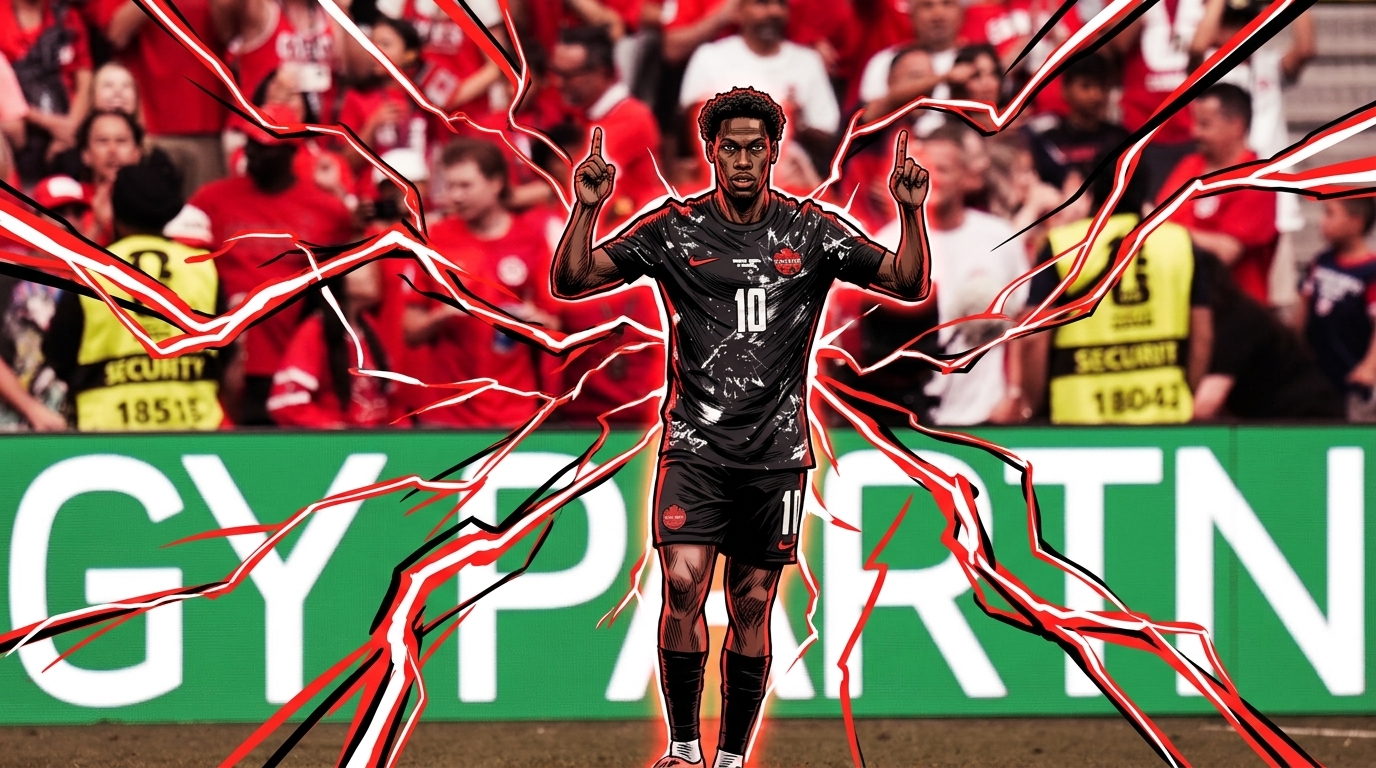
Here’s the actual history. Canada went to the World Cup once before, in 1986 in Mexico. They played three matches, scored zero goals, lost all three. That was it — the entire legacy of Canadian soccer at the highest stage, for forty years. Then ten days ago, Jonathan David scored a hat trick against Qatar in a 6-0 win, a performance that tripled Canada’s all-time World Cup goal total in a single afternoon. A right-footed volley in the 29th minute was his first goal in the run of play in more than a year, per TSN. Cyle Larin added two more. Canadian Prime Minister Mark Carney was in the stands with FIFA President Gianni Infantino watching it happen.
https://x.com/CanadaSoccerEN/status/2057148262067384646
Per CONCACAF, David’s performance made him the first Canadian and just the second CONCACAF player ever to score three goals in a single World Cup match. The 6-0 scoreline was absurd (Qatar finished with nine men) but the execution was real. Canada’s first-ever World Cup point came a week earlier against Bosnia-Herzegovina, a 1-1 draw that the Canadian soccer internet treated like a title. The hat trick came days later. The progression has been real, and it’s been fast.
So why is this getting third-billing?
I grew up in Arizona watching the Premier League on tape delay because my dad liked the accents. I understand the American sports fan’s relationship to soccer at a cellular level: tune in for the USMNT, watch the World Cup final, argue about Messi, check out. The broadcast infrastructure, the columnist attention, the casual sports radio takes — none of it is calibrated for a Canadian knockout run. And the media infrastructure isn’t built for this moment to land the way it should.
Alphonso Davies, Canada’s captain, missed all three group stage matches with a hamstring injury. Jesse Marsch used him as a decoy against Switzerland. He’s confirmed fit today. Think about what that sentence means: the best player on a team that just made soccer history is returning for the most important match in that team’s history. That’s not a footnote. That’s a lead story. The winner of today’s game plays Netherlands or Morocco on July 4, and Canada is ranked 31st to South Africa’s 60th.
Canada’s World Cup knockout arrival is happening in Los Angeles, in a 70,000-seat stadium, on a Saturday afternoon. The host country’s northern neighbor, sharing a media market, a time zone, and a dozen major airports, is doing something it has never done before. The American sports media is covering it like the third bullet point in a bracket update because, once the USMNT exits, no one built the fandom for anything else to matter. That’s the thesis of every uncomfortable conversation about soccer’s place in American media this summer.
That’s not a media failure, exactly. It’s a fandom failure. The product is there. The story is there. The Jonathan David hat-trick tripled Canada’s all-time World Cup goal total and none of the major sports talk shows led with it.
Watch today. Forty years of nothing ended ten days ago, and the thing that replaced it is worth your attention.
Forty years of silence, and we’re treating the end of it like a scheduling note.