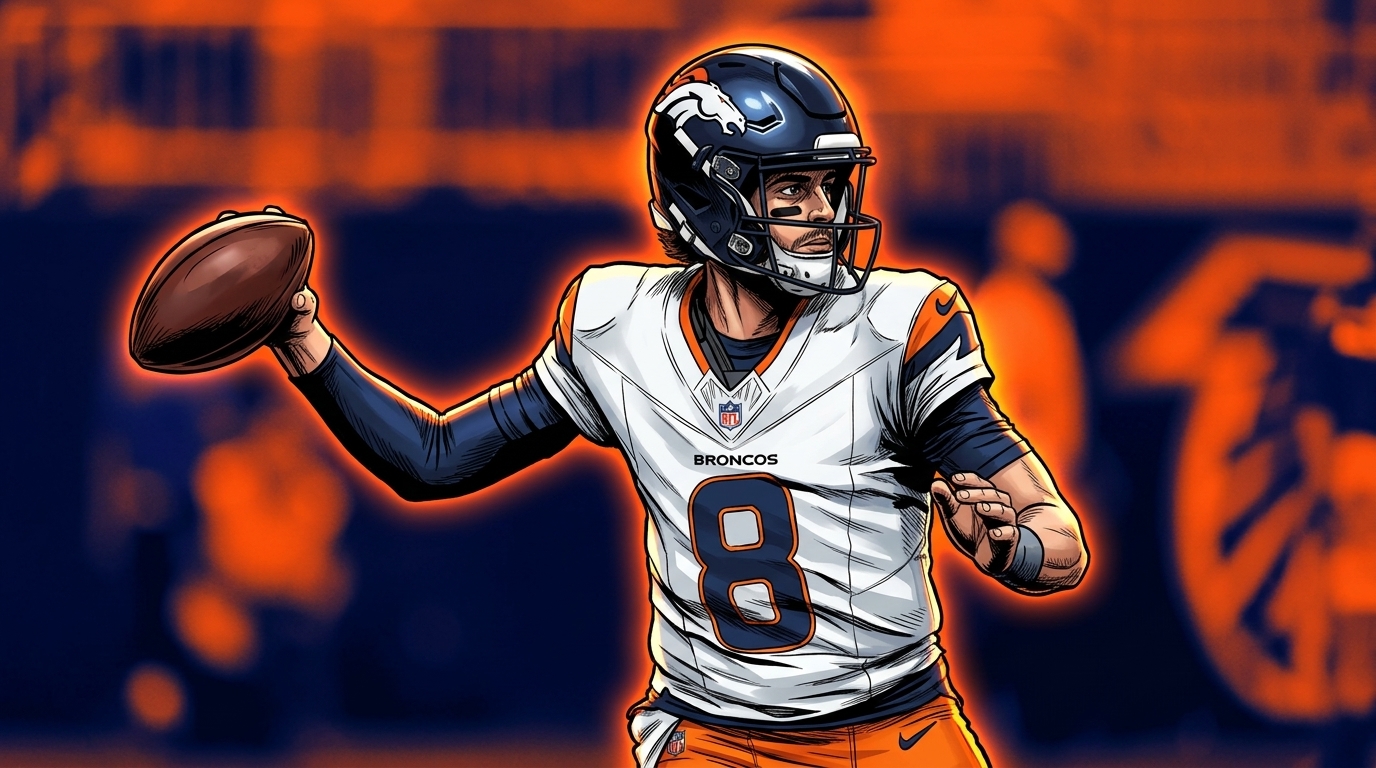

I have read the same “starting quarterback” line dozens of sportsbooks publish for these preseason games, and I am convinced nobody setting them has looked at a single goddamn training-camp practice report in their life. Bo Nix wasn’t a surprise scratch against the Falcons. Sean Payton announced it Wednesday, two full days before kickoff, because Nix is still working back from a fractured right ankle he suffered in January’s playoff win over Buffalo, plus a follow-up surgery in April to clean out bone spurs. He didn’t miss a single practice rep at camp. Everyone with an internet connection knew Denver’s actual QB1 for this game was Jarrett Stidham or Sam Ehlinger before the line even opened.
And Denver was still favored. Books had Nix confirmed out and still had the Broncos anywhere from -3.5 to -5.5 depending where you looked. That’s the part that should bother you if you bet on football, because it means the “who’s out” information got priced in exactly as poorly as the “who’s in” information usually does. The guy laying -5.5 on the Broncos because he saw “Denver Broncos” and assumed Sean Payton’s team just wins wasn’t wrong that Denver would cover. He was wrong about why, which matters more than it sounds like it should.
Stidham and Ehlinger split the game and Denver won 27-7, up 24-0 at the half, at a building that was ostensibly the Falcons’ home field. Payton couldn’t resist a shot at the crowd afterward:
https://twitter.com/awfulannouncing/status/2088435919846305863
That’s the kind of thing a coach gets to say when his backups just embarrassed the home team by 20, and it’s funny, but the number underneath it is the actual story. This is the second straight summer Payton has opened the preseason by starting a backup instead of his actual quarterback, and the results keep looking like this. The market treats “who’s starting” like it’s the only input that matters when it should be treating “who wins with backups in, consistently, under this specific coach” as its own signal. Sportsbooks had that pattern sitting in plain sight, for free, and still built a number off the wrong half of it.
The depth chart isn’t the game plan, and pretending otherwise is where the market keeps losing to itself. A roster sheet tells you who’s allowed to play, not who’s actually going to. Atlanta didn’t make the job any easier either, since the Falcons can’t even say which quarterback starts most weeks, and that uncertainty never dragged Denver’s number down the way it should have if the market were actually pricing who plays instead of which team has the better name on the jersey.
None of this is exotic information. It’s why coach press conferences get treated industry-wide as a legitimate research tool instead of a formality: the roster sheet is aspirational, and the presser is what’s actually happening Thursday. Denver isn’t the only place this shows up. Watson’s -215 isn’t a safe number either, for the same reason: books keep anchoring to a name instead of an actual practice-field answer. Preseason totals last year finished 29-13 for people paying attention to that kind of thing, and teams favored by a touchdown or more in these games have covered at a 33% clip since 2010. That’s not a market that’s slightly inefficient. That’s a market that hasn’t been asked a hard question in over a decade, and every book setting these numbers is fine with that, because the guy betting -5.5 on a name he half-recognizes from the depth chart is the reason they never have to fix their shit.
The fix costs nothing. Practice reports are the free betting edge nobody reads, because checking who’s actually dressing and who’s actually throwing at Wednesday’s session takes two extra minutes nobody wants to spend on a preseason game. Denver’s own game told you the rest: the roster sheet said one thing, the beat writers said another, and only one of those was true by kickoff.