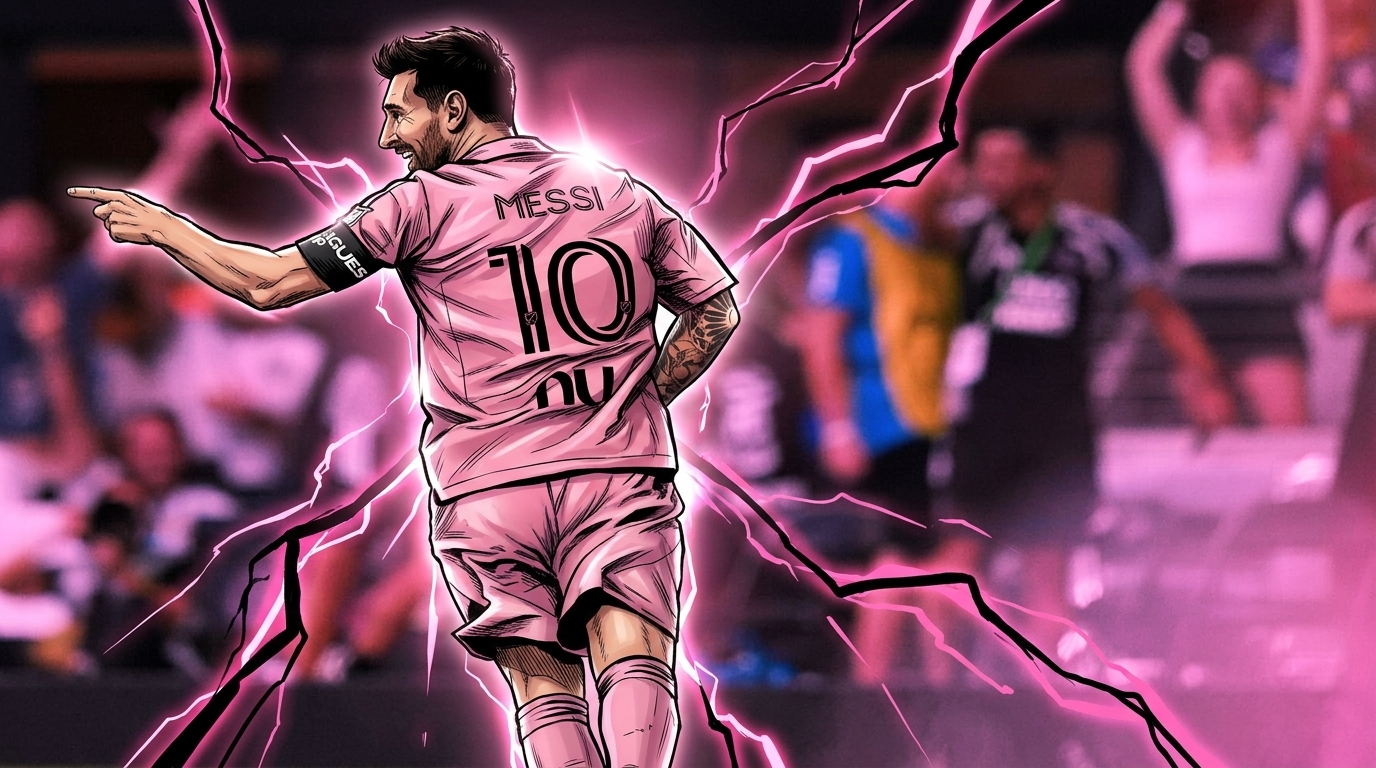
Aston Villa beat SC Freiburg 3-0 on May 20, 2026, at Besiktas Park in Istanbul to win the UEFA Europa League, and within approximately forty-five minutes every English newspaper and sports channel on the planet was going to give you Prince William crying in the stands, John McGinn holding the trophy and weeping into a camera, and thirty years of drought commentary delivered by men who get paid to find the emotional through-line. All of that is real. All of that matters. None of it is the point.
The point is that on April 19, 2021, Arsenal, Chelsea, Liverpool, Manchester City, Manchester United, and Tottenham Hotspur announced the formation of the European Super League — a permanent, closed competition specifically engineered so that clubs like Aston Villa could never threaten them in European football again. No relegation. No qualification. Permanent founding member status, locked in forever, insulated from the consequences of their own mediocrity by the weight of their brand revenue. The competition Aston Villa just won exists inside the ecosystem those six clubs tried to exit — permanently, for money, by decree, with no re-entry for clubs like Villa ever again. That’s not subtext. That is the story.
https://twitter.com/AVFCOfficial/status/2057203938395296210
Let’s be precise about what happened in 2021, because precision is ammunition. Per CNBC, all six English clubs were founding members of the Super League. The explicit design was a closed loop — entry by invitation, permanence by decree, competition by illusion. Within 48 hours, all six withdrew under the pressure of fan protests and government threats. They were fined a combined £22 million, which for these clubs is slightly less painful than a parking ticket. And then the Premier League went right back to being structurally tilted in exactly the same direction the Super League would have made permanent — same architecture, different branding, same result. The gap between what the Big Six spend and what Villa can spend is documented, public, and enormous. The rules exist on paper. The enforcement is a different matter entirely.
Which brings us to Manchester City, who face 115-plus Premier League charges for alleged financial rule breaches filed in February 2023. Closing arguments concluded December 2023. As of today — sixteen-plus months later — there is no verdict. Sixteen months. The competition is supposed to be self-policing. The rules are supposed to create a level enough surface that a club like Aston Villa, owned by Nassef Sawiris and Wes Edens since 2018, promoted from the Championship and rebuilt brick by brick, can compete at the top of European football. And yet here we are, watching the enforcement apparatus move at the pace of continental drift while the sport keeps going. So what Villa did Wednesday night in Istanbul is not just a feel-good story about an underdog. It is a goddamn refutation of a structural argument. Youri Tielemans scored in the 41st minute. Emiliano Buendia added a second just before halftime. Morgan Rogers put it away in the second half. 3-0. The same Europa League — the one you’ll notice is still structurally connected to the broader system the Super League tried to dismantle — delivered a final score that nobody at the founding table of that 2021 announcement wanted to see. A non-Big Six English club, winning European football, on merit, through a competition those six clubs tried to kill. The scoreboard does not lie.
Unai Emery has now won five UEFA Europa League titles — a record that has never been matched in the history of the competition, per ESPN Soccer. Sevilla in 2014, 2015, and 2016. Villarreal in 2021. Aston Villa in 2026. Three different clubs. Five trophies. He is only the fourth manager in history to win five European trophies at all, alongside Trapattoni, Ancelotti, and Mourinho. What Emery has done is build a philosophy that travels — that isn’t dependent on a single club’s decade of accumulated transfer advantage. That is a direct rebuke to the theory that European success is a closed system. The Super League founders bet their credibility on that theory. Emery has now disproven it five times.
John McGinn lifted the trophy. Per The Scotsman, he said it was “the proudest moment and night of my career so far.” He is the first Scot to lift the Europa League trophy since Gary McAllister did it in 2001. Villa’s last major European prize was the 1982 European Cup — their first European trophy in 44 years. Their last piece of silverware of any kind was the 1996 League Cup. Prince William, a lifelong Villa supporter, was in the stands at Besiktas Park. The 1982 European Cup final happened less than a month before he was born. He had never in his lifetime seen his club win a European trophy. None of that is trivial. People waited decades for this. That is real.
But here is what I need you to hold onto when the coverage pivots entirely to the royal angle and the drought narrative and the beautiful symmetry of McGinn weeping: the people who tried to make this impossible are still running the same clubs. They withdrew from the Super League under duress, paid a fine that meant nothing to them, and returned to business as usual inside a league where our soccer coverage keeps documenting the same structural distortions season after season. The Aston Villa Europa League 2026 win is the best possible outcome — and also the outcome those clubs spent real money trying to ensure could never happen. They failed. One time. The architecture they built to replace the Europa League is still being quietly relitigated in courts and boardrooms while nobody’s watching.
Villa won. McGinn cried. William was there. Emery made history. Every word of it is true and worth celebrating. Just don’t let the celebration be a reason to look away from the table that was designed to keep Villa from sitting at it in the first place. They crashed the party. The hosts are still the hosts. That pisses me off. It should piss you off too.