
We’ve been waiting years for baseball to run out of things left to review. On Saturday night, it found one, in the worst possible spot. The Brewers beat the Rays 5-4 in Game 2 of the Rays and Brewers’ long-awaited World Series, taking a 2-0 series lead, and the final out came down to first-base umpire James Hoye’s read of Yandy Diaz’s wrists on a full-count curveball in the dirt. Hoye ruled Diaz had gone around. Strike three, game over. Diaz still doesn’t think he did.
That disagreement is the wrong argument to be having. The actual story isn’t whether Diaz swung. It’s that Major League Baseball has built review systems for nearly every close call that can decide a World Series game, and left this specific one, by rule, as a judgment call nobody can appeal.
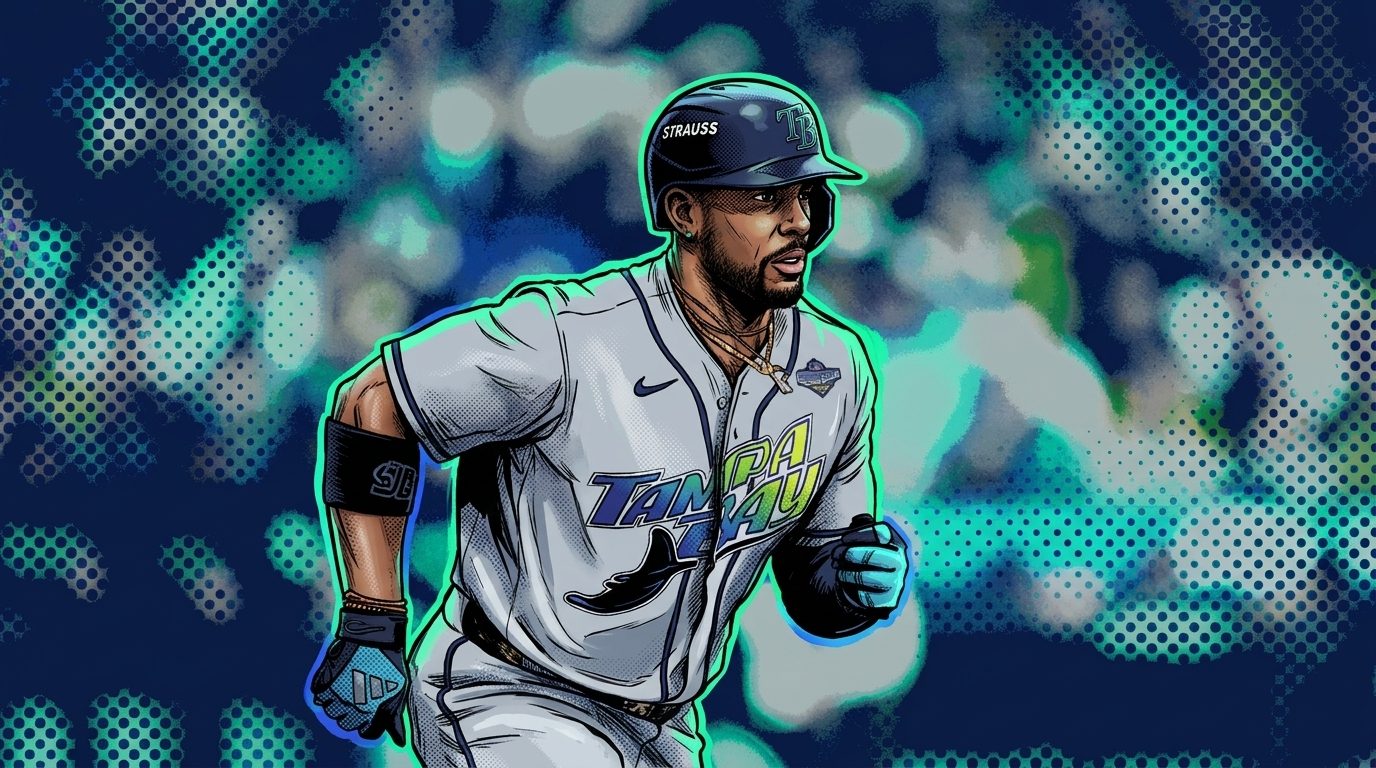
Start with what actually happened, because the sequence matters more than the freeze-frame everyone’s fighting over. The Tampa Bay Rays built a 4-0 lead on Liam Hicks’s first-inning, two-run homer. The Milwaukee Brewers clawed it back: Sal Frelick’s solo shot tied it in the sixth, Cooper Pratt’s go-ahead RBI single came an inning later, part of the Brewers outworking the league’s biggest spenders all October. The Rays got one more chance in the ninth. Jonny DeLuca stood on third as the tying run. Aaron Ashby, on in relief, ran the count full. He buried a curveball in the dirt. Home plate umpire Jim Wolf didn’t call it a swing (left alone, that’s ball four, Diaz to first, DeLuca still 90 feet from home with second base empty). Brewers catcher William Contreras appealed immediately to Hoye at first base. Hoye ruled Diaz had gone around. Game over, per ESPN’s account of the inning.
Diaz disputed it on the spot. He’s a reasonable witness to doubt and a reasonable one to believe: he led the American League in hits this season and, as LarryBrownSports noted, never once used baseball’s Automated Ball-Strike challenge system all year, for whatever that’s worth as a read on his trust in getting a fair read from the machines or the men. FOX’s broadcast booth didn’t pretend to have a clean answer either: “Oh man. That hurts,” was the on-air reaction, per Yahoo Sports’s rundown of the aftermath, and the people whose job is literally to adjudicate replays in real time split down the middle on whether Diaz went around.
Watch it yourself:
https://x.com/espn/status/2114210694082314279
I’ve run that clip back more times than I’d like to admit, from both angles ESPN posted. I still don’t have a confident answer. That’s the whole problem in one video.
Why Didn’t the Home Plate Umpire Call It First?
Jim Wolf, working the plate, didn’t initially rule the check-swing a strike (that would have been ball four, putting Diaz on first and the tying run at third, one swing away instead of none). Contreras appealed to first-base umpire James Hoye on the spot, and Hoye overruled the non-call, ending the game on his read alone.
That appeal process is the only safeguard baseball has built for this call, and it’s worth sitting with how thin it is. One umpire looks away from the play entirely, trusts a colleague’s angle from ninety feet over, and that colleague’s answer is final. There is no second look. There is no stopping the game to check a monitor. Per Yahoo Sports, that’s exactly the gap Fox’s own broadcast crew flagged live, on the air, during a World Series game their network was paid to call.
Why Can’t MLB Review a Check Swing Like Everything Else?
Because the rule doesn’t define one. MLB’s rulebook has no precise standard for what separates a checked swing from a completed one, and no replay or challenge mechanism exists for it at the major-league level, even as the league added automated ball-strike challenges this season and already reviews home runs, fan interference, and neighborhood-play tags.
This isn’t an oversight the league forgot to patch. The gap has survived multiple expansions of instant replay, the entire development of the Automated Ball-Strike system that got its first World Series test this October, and a minor-league pilot program testing a Check-Swing Challenge that MLB has simply declined to bring upstairs. Every other ambiguous call in the sport eventually got a technological backstop. This one didn’t.
What Did Joe Davis Actually Say On Air?
Fox and World Series broadcaster Joe Davis said, live: “We got ABS for the first time this year, getting the balls and strikes right; we need to get a system that can get [check-swings] right.” He said it in real time, during the broadcast of the exact game it describes.
I think that’s the most underrated sentence of this World Series so far. Davis has no outside agenda here. He’s the league’s own broadcast partner, watching the gap happen live and naming it without being asked. When the booth calling the game admits the review infrastructure doesn’t cover the moment it’s covering, that’s not commentary. It’s an institution’s spokesperson describing a blind spot the institution chose not to fix.
So Why Hasn’t MLB Fixed This?
I don’t think it’s a technology problem. Replay exists. The minor-league pilot exists. What’s missing is the will to write a bright-line definition and put a camera on it, the same way baseball eventually did for everything else once the complaints got loud enough.
Here’s my actual read on why: defining a precise standard for a check swing means admitting, on the record, that a single umpire’s gut call has been deciding World Series at-bats by feel for roughly a century. Replay for home runs and fan interference never required that admission: those were always objective facts a camera could settle. A check-swing standard would retroactively indict every “he went around” ruling baseball has ever made. I think the sport prefers the ambiguity to owning that math, and that’s a choice, not an accident. This is my extrapolation from the pattern, not something MLB has said out loud. But it’s hard to read the pattern any other way once you’ve watched the league plug every comparable hole except this one.
This is also the second straight game to end this way. Game 1 of this World Series was decided when a Last-Out Challenge overturned the final out after a fielder missed second base, per LarryBrownSports. Two games, two endings settled by a review system that worked exactly as designed in one case and doesn’t exist at all in the other. I spent enough years reading old Columbia Journalism Review media-criticism pieces to recognize the shape of an institution protecting a comfortable myth over an inconvenient fix, and this has that shape.
Watch what happens next: if the Brewers close this out in five or six games, the check-swing call becomes a trivia footnote by Thanksgiving. If the series tightens and a similarly unreviewable moment decides Game 6 or 7, MLB will face real pressure, possibly this winter, to fast-track the Check-Swing Challenge out of the minors. Either way, the gap Joe Davis named on air Saturday night doesn’t close itself. Someone in a league office has to decide the myth isn’t worth the next controversy, and nothing about this sport’s history suggests that happens before it has to.