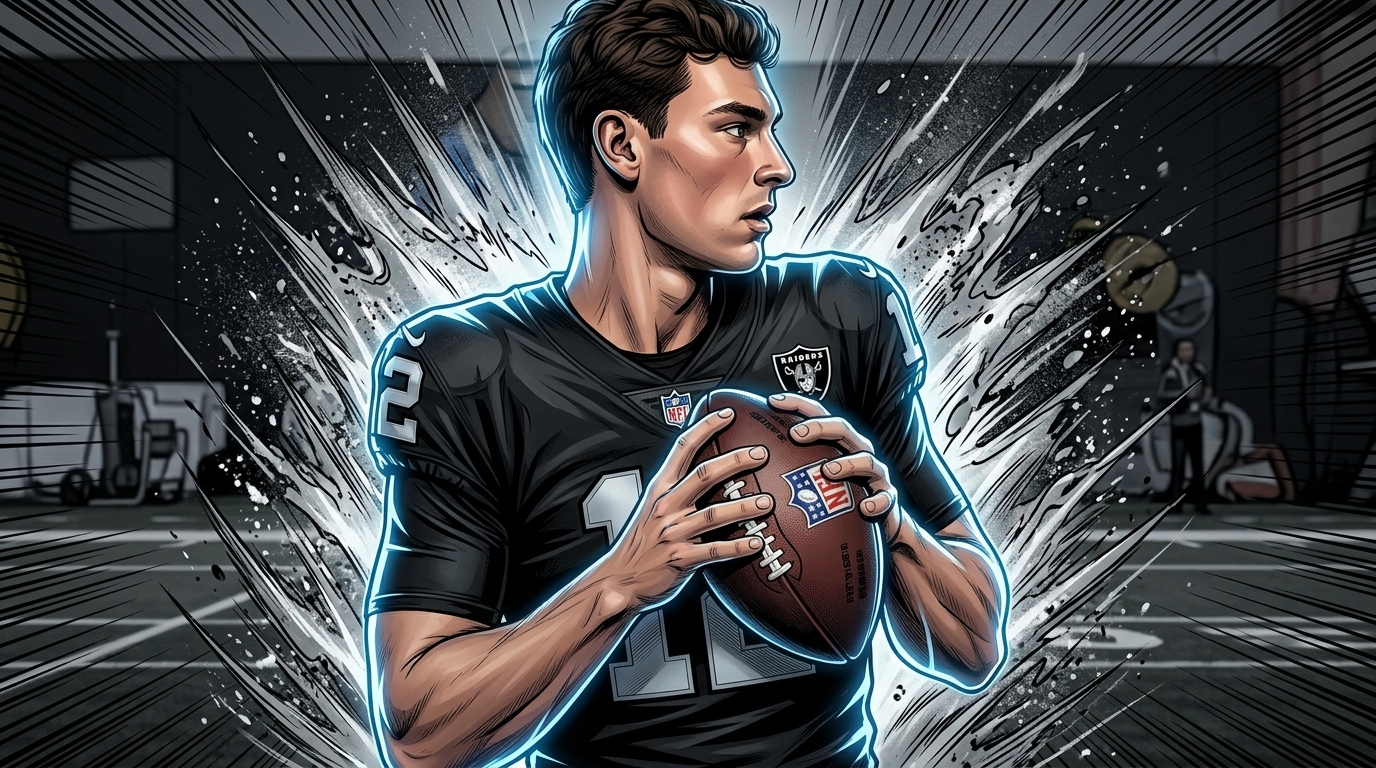
Two days before the draft, the conventional wisdom has calcified into something approaching consensus: the top of the board is “set,” the quarterback class is “clear,” and everyone “knows” who’s going where. This is, of course, complete fiction.
The reality is that every front office picking in the top 10 is operating from the same fundamental anxiety: the guy they have under center isn’t the guy, and this draft class might not have that guy either. That’s a uniquely terrible position to negotiate from, and it’s going to produce chaos.
The Quarterback Class Nobody Loves
Here’s what makes this draft fascinating: there are four quarterbacks who could reasonably go in the top 10, and not a single one of them would have been the consensus QB1 in last year’s class. They’re all some version of “really good with caveats,” which is front office kryptonite.
The scouting reports read like restaurant reviews where the critic loved the appetizer but found the main course “fine.” Arm talent? Sure. Processing speed? Mostly. Leadership? Depends who you ask. Durability? Don’t bring it up.
This is the kind of class where the guy taken fourth overall outperforms the guy taken first, and everyone spends the next decade arguing about whether the first pick was a reach or the fourth pick just needed the right situation. (It will be both.)
The Domino Theory
Mock drafts treat the first round like a series of independent decisions, but they’re not. They’re a chain reaction, and the detonator is whichever team panics first.
If the Panthers take a quarterback at one — and they should, despite what their beat writers are being fed — then the board opens up for Cleveland at three. But if Carolina gets cute and takes the edge rusher, suddenly every team from two through eight is recalculating in real time, and the trade-up calls start flooding in.
The teams that win this draft won’t be the ones with the best boards. They’ll be the ones who stay calm while everyone else scrambles to react.
What History Tells Us
Since 2015, teams that drafted quarterbacks in the top 5 have a success rate of roughly 40 percent, which sounds terrible until you realize the success rate for quarterbacks taken 6-15 is closer to 25 percent. The lesson isn’t “don’t draft a quarterback high.” The lesson is “the whole exercise is a crapshoot, so you might as well swing big.”
The teams that get in trouble are the ones who talk themselves into a guy at pick 8 because they didn’t have the conviction to trade up to pick 2. Half-measures in the quarterback market are how you end up paying $30 million a year for a guy who gets you to 8-9 every season.
The Real Story
The draft itself will be theater — the suits, the handshakes, the manufactured emotion. But the actual story is playing out right now in conference rooms and encrypted group chats, where general managers are trying to figure out whether their evaluation of a 22-year-old kid is good enough to bet their career on.
Most of them will get it wrong. That’s not cynicism — that’s just the math. The draft is a humility machine, and Thursday night is when the machine starts running.