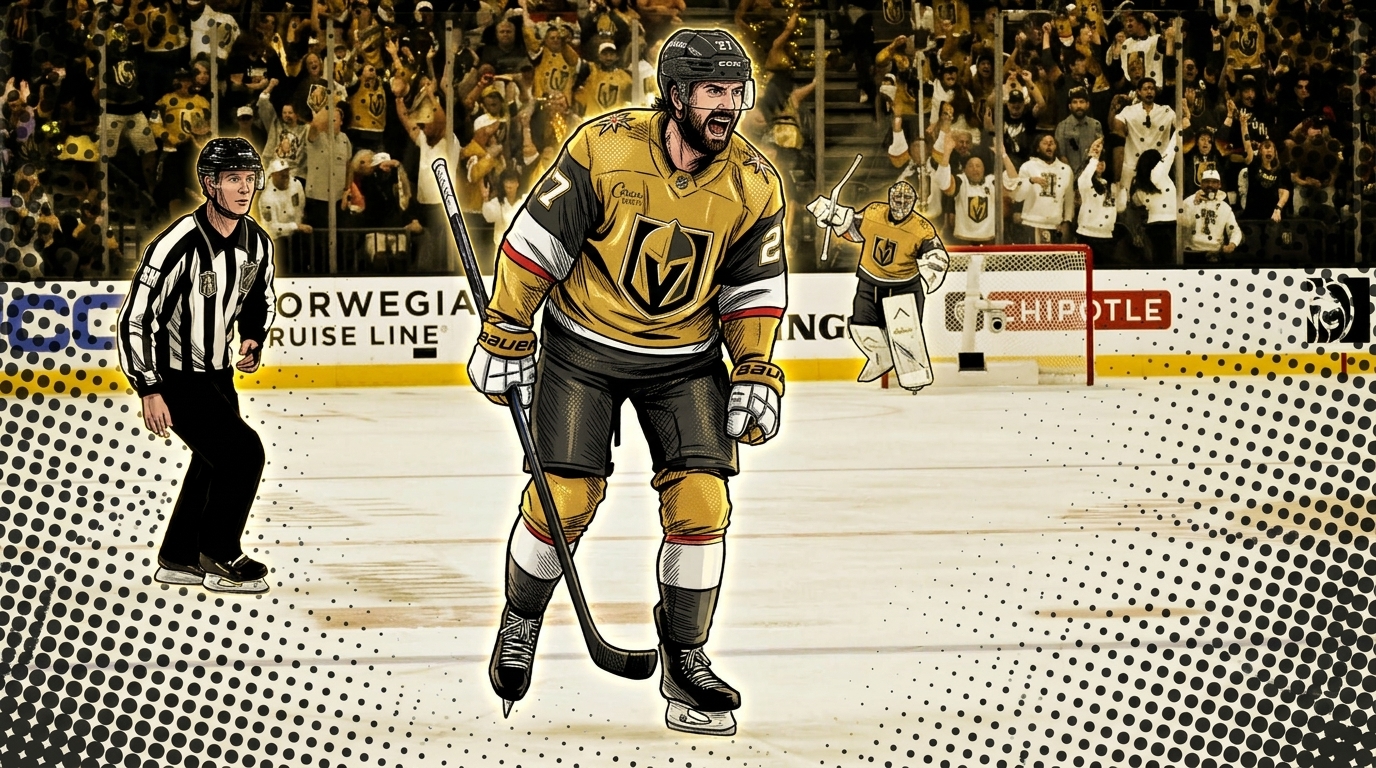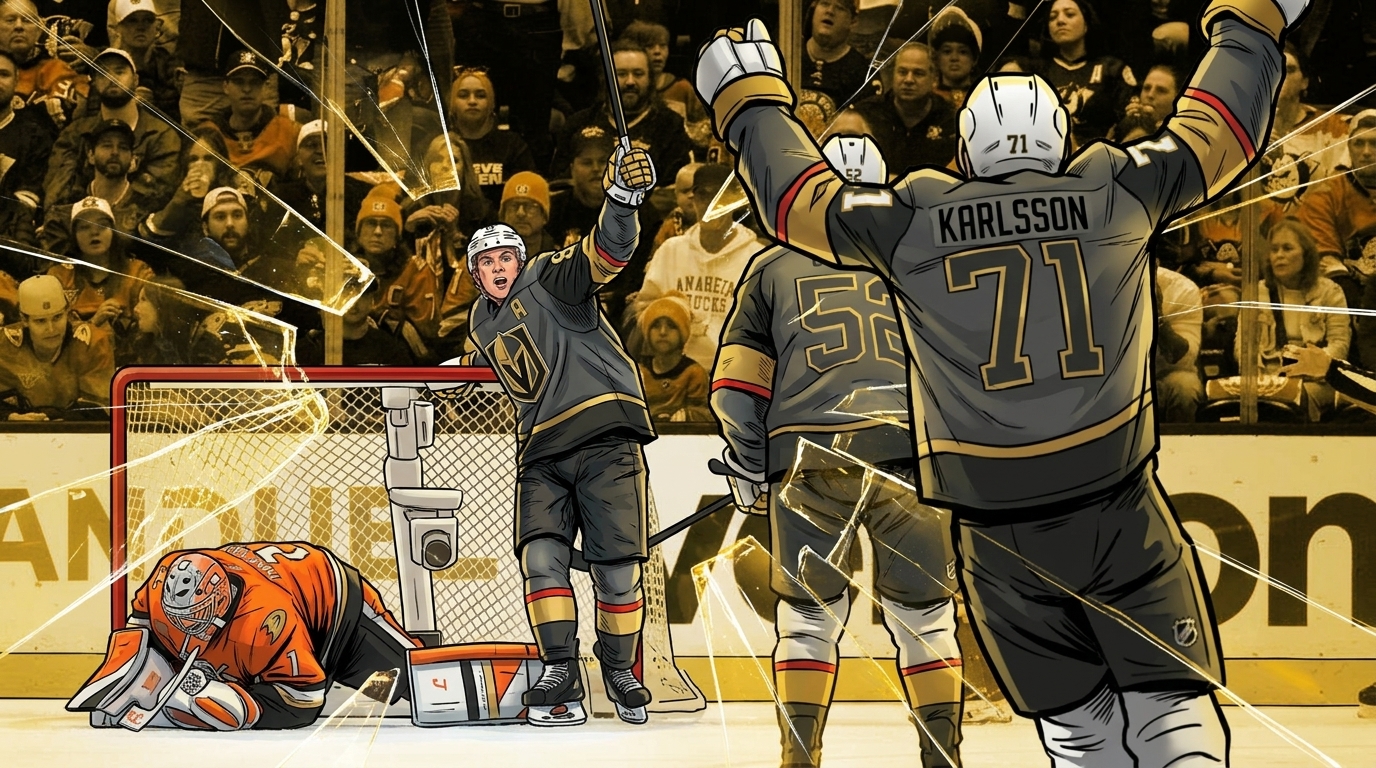

Mitch Marner beat Maurice Richard’s 69-year-old hat trick record in the Finals by eleven seconds. The cherry on top? A favorable bounce on the series-clinching goal. Bounces matter. Everyone pretends they don’t. They do.
Here’s the thing about the fastest hat trick in Stanley Cup Final history: it’s a perfect moment that got immediately undercut by pure luck. Marner scored three goals in 6 minutes and 10 seconds during the second period of Game 3—a natural hat trick in a span that felt less like hockey and more like a video game on rookie difficulty. Maurice Richard held the record for 69 years at 6:21, set in 1957 when he was 35 and hockey mattered differently. Marner, 29, broke it by eleven seconds; Vegas went up 4-0; everything pointed to a coronation.
The thing about Marner’s record is that it came with a second-period assist too. Four points in a single period. The Knights were coronating themselves. They’d taken Game 1 to grab the early lead, then dropped Game 2 to Carolina, and now Game 3 was the pivotal swing game—the moment where a historic individual performance could translate into a commanding series position. Marner was supposed to be the hero. The guy who beat Maurice Richard in the Finals. The guy leading the entire 2026 playoff field with 28 points. The narrative was written in permanent ink. This is hockey fandom at its most confident, which means it was about to get humbled.
Then Carolina showed up in the third period and reminded everyone that hockey is a three-act play with a cruel sense of timing.
The Hurricanes scored three goals in 39 seconds. Three. In thirty-nine seconds. The kind of fever dream that makes goaltenders question their life choices and their contract negotiations. Martinook, Hall, Staal—all in a blur—and suddenly Vegas’s four-goal lead dissolved into Svechnikov’s equalizer with under two minutes remaining in regulation. The game was tied 4-4, and the narrative shifted from “Marner just rewrote 69 years of Finals history” to “Oh no, Vegas is actually choking in spectacular fashion.” This is what happens when you build your mythology too early; the game has no mercy for premature victory laps.
Double overtime. This is where fate arrives wearing a goalie mask and bounces off a skate.
Shea Theodore won the game at 5:38 of the second OT when his shot ricocheted off Carolina goaltender Brandon Bussi’s skate and found the back of the net. It wasn’t a snipe. It wasn’t a play-making feed from a deep-thinking defenseman. It was a bounce; it was luck; it was the kind of playoff hockey moment that gets reframed as “destiny” because that’s what sports narratives do. They take randomness and layer it with meaning. They transform physics into poetry, deflection into determination.
Vegas won 5-4 and took a 2-1 series lead. Marner now leads all 2026 playoff players with 28 points—10 goals and 18 assists—and the awards talk is unavoidable. His playoff dominance is real. But here’s what’s worth thinking about: A bounce defined that game’s outcome. Marner’s record-breaking hat trick, the fastest in Stanley Cup Final history, defined the second period’s narrative. Carolina’s 39-second offensive fury defined what almost happened. Theodore’s lucky skate defined what actually did. All of these things are true. All of them. And yet only one gets the monument, only one gets the 69-year footnote in the record books.
Stanley Cup history isn’t written by skill or consistency; it’s written by the angle at which a puck finds a goalie’s equipment. We all know this. We just pretend we’re watching a meritocracy instead of a sport where centimeters of deflection matter more than the player who took the shot. Marner broke the record. Vegas survived because physics bounced the right way. Both things happened. Only one gets remembered the way people want to remember it.